
Tuesday, 8 May 2012
[Enter Post Title Here]
Update On-The-Fly Situation:
I was hanging over the weekend so the specimen would not be lying and is on couriers office with a high likelihood of the damage. It's a good thing I did hang off as I've found another fly exactly the same as the first one. After doing some research it seems to me both these flies could be Chrysanthrax dispar.
Photo#124305
 Copyright © 2007 Scott Nelson
Unknown Small Bee Fly - Chrysanthrax dispar
Three Lakes Wilderness Area, Osceola County, Florida, USA
July 3, 2007
Size: 5 - 6 mm
tag • login or register to post comments
Contributed by Scott Nelson on 4 July, 2007 - 4:44pm
Last updated 29 August, 2009 - 11:54am
I don't know whether these are endemic to New Zealand or have somehow passed border control, we have a shipping port not very far from us. It will be interesting to see what the answer the Department of conservation come up with.
I am hoping to get this specimen away tomorrow, so now it is just a matter of time.
Copyright © 2007 Scott Nelson
Unknown Small Bee Fly - Chrysanthrax dispar
Three Lakes Wilderness Area, Osceola County, Florida, USA
July 3, 2007
Size: 5 - 6 mm
tag • login or register to post comments
Contributed by Scott Nelson on 4 July, 2007 - 4:44pm
Last updated 29 August, 2009 - 11:54am
I don't know whether these are endemic to New Zealand or have somehow passed border control, we have a shipping port not very far from us. It will be interesting to see what the answer the Department of conservation come up with.
I am hoping to get this specimen away tomorrow, so now it is just a matter of time.

That dang fly again – nand then there were two.
I was hanging over the weekend so the specimen would not be lying and is on couriers office with a high likelihood of the damage. It's a good thing I did hang off as I've found another fly exactly the same as the first one. After doing some research it seems to me both these flies could be Chrysanthrax dispar.
Photo#124305
Copyright © 2007 Scott Nelson
Unknown Small Bee Fly - Chrysanthrax dispar
Three Lakes Wilderness Area, Osceola County, Florida, USA
July 3, 2007
Size: 5 - 6 mm
tag • login or register to post comments
Contributed by Scott Nelson on 4 July, 2007 - 4:44pm
Last updated 29 August, 2009 - 11:54am
I don't know whether these are endemic to New Zealand or have somehow passed border control, we have a shipping port not very far from us. It will be interesting to see what the answer the Department of conservation come up with.
I am hoping to get this specimen away tomorrow, so now it is just a matter of time.
Thursday, 3 May 2012
It just goes to show even amateurs can still make scientific contributions
.
The other day I had just taken a break and on returning to my desk found a house fly sitting on my mouse as if still alive. The creature however did not seem alarmed by my reappearance so I became curious and examined it more intimately.
It was most decidedly dead but the unusual thing was I had never seen a fly like it. The front end was that of a normal house fly, but the abdomen was entirely different it was striped black and white in a not unattractive manner. The wings also appeared shorter than the ordinary house fly.
 I decided this justified further investigating and put the specimen under the microscope for a more detailed view . The stripes were unquestionably part of the thorax, although the poor beast had some kind of fungal infection , which had obviously infiltrated its whole-body, as threads were sticking out between in the abdominal platelets, the white nevertheless showed as platelets themselves.
 Not having adequate knowledge in this field I contacted an entomologist with the Department of Conservation, David Voice, On scrutiny of the photographs he said it would take a while for them to get back to me.
The following day I received an e-mail from Mr Voice indicating that this fly did express some anomalousness and could I please dispatch it to his department for further scrutiny and analysis.
The specimen is now what I hopefully is packed in a safe and protected manner and ready to send to Mr Voice for further recognition and analysis.
As any results come through I will keep the blog updated.
Not having adequate knowledge in this field I contacted an entomologist with the Department of Conservation, David Voice, On scrutiny of the photographs he said it would take a while for them to get back to me.
The following day I received an e-mail from Mr Voice indicating that this fly did express some anomalousness and could I please dispatch it to his department for further scrutiny and analysis.
The specimen is now what I hopefully is packed in a safe and protected manner and ready to send to Mr Voice for further recognition and analysis.
As any results come through I will keep the blog updated.


Monday, 16 April 2012
Flight of a Kakapos key to survival
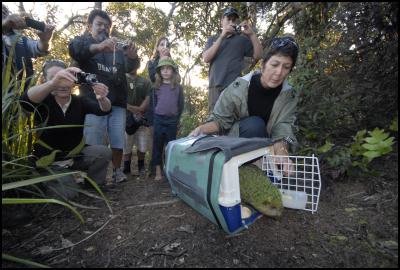
The transfer of seven critically endangered kakapo to Little Barrier Island is a significant move to help secure the species’ survival, Conservation Minister Kate Wilkinson says.
The native parrots were captured on the predator-free Whenua Hou/Codfish Island and Anchor Island in Southland then airlifted – by helicopter and Air New Zealand passenger flights - to their new home north of Auckland yesterday.
Though the birds will be monitored by the Department of Conservation on Hauturu/Little Barrier Island, they will be free to breed and raise their chicks without the high level of support they currently receive.
“This is an epic journey by these flightless birds. They have been flown almost the length of the country in one day to a new home,” Ms Wilkinson says.
“The kakapo have been released on Little Barrier Island to see if they can successfully raise their chicks without aid. Their progress will be closely monitored and support will be provided if it’s required to keep the birds alive.
“There are only 126 kakapo left in the world and we need to see if they can survive and flourish without outside help. This initiative could play a major role in securing the long term survival of the species.
Kakapo lived on Hauturu/Little Barrier Island between 1982 and 1999, when they were moved so the island could be cleared of rats. It is expected to take up to 10 years to determine if the kakapo can bring up their chicks without assistance.
The work is part of the Kakapo Recovery Programme, a joint initiative between the Department of Conservation, New Zealand Aluminium Smelters and Forest & Bird that dates from 1990.
“This is DOC’s longest-running conservation partnership and it’s been a great success. Since it was formed kakapo numbers have more than doubled.
“This partnership shows what can be achieved when the government, the private sector and the community work together toward a shared conservation goal.”
Background Information:
The kakapo or ‘night parrot’ is unique to New Zealand and was pushed toward extinction by human colonisation and the introduction of predators such as rats, stoats and possums. By 1995 only 50 kakapo were known to exist. Today there are 126 kakapo being managed by DOC on Whenua Hou/Codfish Island, near Stewart Island, and Anchor Island, in Fiordland.
The Kakapo Recovery Programme includes running breeding programmes, maintaining predator-proof sanctuaries and strengthening the wild kakapo population. It combines the efforts of scientists, rangers and volunteers. This work includes intensive monitoring of kakapo, regular health checks, predator control, supplementary feeding, artificial incubation and hand-rearing, research (ground breaking artificial insemination in birds, genetic studies, and supplementary feeding trials), and developing technology.
Eight kakapo were captured on Whenua Hou/Codfish Island and Anchor Island yesterday. One of the birds was found to have a minor injury and was taken to Auckland Zoo as a precaution.
Thursday, 29 March 2012
Act now to save the Maui's dolphin from extinction | GREENPEACE New Zealand
Act now to save the Maui's dolphin from extinction
Send this message to the NZ Government now
NZ's tiny indigenous Maui's dolphin is on the brink of extinction. Unless substantial action is taken very soon - we will lose them forever. The New Zealand Government has proposed some interim action but it is not enough - send this message to Primary Industries Minister David Carter now urging stronger action:
Please note: Required fields are marked with an asterisk (*).
Please correct the marked fields below.
Please edit the message as you see fit
Your full name *
Your full name
One of the fields in this row is required.
Email *
This field is required.
This is not a valid email adress. Please try again...
Country *
Select a countryAfghanistanÅland IslandsAlbaniaAlgeriaAmerican SamoaAndorraAngolaAnguillaAntarcticaAntigua and BarbudaArgentinaArmeniaArubaAustraliaAustriaAzerbaijanBahamasBahrainBangladeshBarbadosBelarusBelgiumBelizeBeninBermudaBhutanBoliviaBosnia and HerzegovinaBotswanaBouvet IslandBrazilBritish Indian Ocean TerritoryBrunei DarussalamBulgariaBurkina FasoBurundiCambodiaCameroonCanadaCape VerdeCayman IslandsCentral African RepublicChadChileChinaChristmas IslandCocos (Keeling) IslandsColombiaComorosCongoCongo, The Democratic Republic of TheCook IslandsCosta RicaCôte D'ivoireCroatiaCubaCyprusCzech RepublicDenmarkDjiboutiDominicaDominican RepublicEcuadorEgyptEl SalvadorEquatorial GuineaEritreaEstoniaEthiopiaFalkland Islands (Malvinas)Faroe IslandsFijiFinlandFranceFrench GuianaFrench PolynesiaFrench Southern TerritoriesGabonGambiaGeorgiaGermanyGhanaGibraltarGreeceGreenlandGrenadaGuadeloupeGuamGuatemalaGuernseyGuineaGuinea-bissauGuyanaHaitiHeard Island and McDonald IslandsHoly See (Vatican City State)HondurasHong KongHungaryIcelandIndiaIndonesiaIranIraqIrelandIsle of ManIsraelItalyJamaicaJapanJerseyJordanKazakhstanKenyaKiribatiKorea, Democratic People's Republic ofKorea, Republic ofKuwaitKyrgyzstanLao People's Democratic RepublicLatviaLebanonLesothoLiberiaLibyaLiechtensteinLithuaniaLuxembourgMacaoMacedoniaMadagascarMalawiMalaysiaMaldivesMaliMaltaMarshall IslandsMartiniqueMauritaniaMauritiusMayotteMexicoMicronesia, Federated States ofMoldovaMonacoMongoliaMontenegroMontserratMoroccoMozambiqueMyanmarNamibiaNauruNepalNetherlandsNetherlands AntillesNew CaledoniaNew ZealandNicaraguaNigerNigeriaNiueNorfolk IslandNorthern Mariana IslandsNorwayOmanPakistanPalauPalestinian Territory, OccupiedPanamaPapua New GuineaParaguayPeruPhilippinesPitcairnPolandPortugalPuerto RicoQatarRéunionRomaniaRussian FederationRwandaSaint BarthélemySaint HelenaSaint Kitts and NevisSaint LuciaSaint MartinSaint Pierre and MiquelonSaint Vincent and The GrenadinesSamoaSan MarinoSao Tome and PrincipeSaudi ArabiaSenegalSerbiaSeychellesSierra LeoneSingaporeSlovakiaSloveniaSolomon IslandsSomaliaSouth AfricaSouth Georgia and the SSISpainSri LankaSudanSurinameSvalbard and Jan MayenSwazilandSwedenSwitzerlandSyrian Arab RepublicTaiwanTajikistanTanzaniaThailandTimor-lesteTogoTokelauTongaTrinidad and TobagoTunisiaTurkeyTurkmenistanTurks and Caicos IslandsTuvaluUgandaUkraineUnited Arab EmiratesUnited KingdomUnited StatesUnited States Minor Outlying IslandsUruguayUzbekistanVanuatuVenezuela, Bolivarian Republic ofViet NamVirgin Islands, BritishVirgin Islands, U.S.Wallis and FutunaWestern SaharaYemenZambiaZimbabwe
Select a country
This field is required.
Phone *
This field is required.
This is not a valid phone number.
Contact me? It is easy to unsubscribe, just click the 'unsubscribe' link in any newsletter.
Message subject
Message *
Like many Kiwis I am concerned about the alarmingly low number of Maui's dolphins revealed in the recent population study released by the Department of Conservation, and the serious decline in their population. I support urgent action to remove threats to the remaining dolphins, the main known threat being gillnet and trawler fishing in Maui's dolphin habitat. The National Institute for Water and Atmospheric Research (NIWA) estimated in 2008 that 110 to 150 Hector's and Maui's dolphins die in commercial set nets every year. I ask that you urgently implement a ban on gillnet and trawler fishing throughout Maui's dolphin habitat, to a depth of 100 meters. The urgent implementation of such an interim measure must be followed up by the adoption of a permanent protection measure to this effect. Extending the measures to protect Maui's dolphins is a matter of extreme urgency, as the very future of these small dolphins are at stake. These measures must be implemented in full, not compromised by industry interests when more selective and sustainable fishing methods are possible. New Zealand must not become the next country to confess to the world that our negligence has allowed a dolphin species to be wiped off the face of the earth. lets show the world that New Zealand is not one country that puts its money where its mouth is and does not idly sit by and watch another species vanish into oblivion without lifting a finger to stop that happening. We have done it before, the Black Robin is a classic example of New Zealanders not willing to let a species vanish forever. We have a reputation to keep up and the eyes of the world turn to us because we are not quitters.. Let's not start tarnishing this reputation now. The complete survival of this species lies in your hands and your voice.. What will you tell your grandchildren when they ask why this species became extinct. Will you just hang your head in shame and say "I did nothing". Tony K Lucas New Zeqaland
Message
This field is required.
Your information is safe with us. Greenpeace will never share, sell or swap your information with
Act now to save the Maui's dolphin from extinction | GREENPEACE New Zealand
Tuesday, 27 March 2012
Return of the saddleback - Story - Environment/Sci - 3 News
Return of the saddleback

The saddleback (photo supplied)
Wed, 14 Mar 2012 4:33a.m.
The endangered saddleback will return to the Auckland mainland in March, for the first time in more than 150 years.
Ninety of the rare birds are being released into the open sanctuary at Tawharanui Regional Park, and will test its success as a pest-free sanctuary.
The saddleback, or tieke, is the latest in a long line of residents brought in to the sanctuary – kiwi, pateke, robins and whiteheads have all been introduced, and bellbirds and kaka have returned of their own accord.
Massey University’s Dr Kevin Parker says the birds will be sourced from three different colonies, which he hopes will strengthen “genetic fitness and overall population health” – if it is practical.
He says it is unknown if the birds, which will have different songs specific to the colony they come from, will be “willing to pair and breed”.
Predators, particularly rats, were responsible for the saddleback’s disappearance from the mainland in the mid to late 1800s.
Stolen huia feathers worth $40,000 - Story - Environment/Sci - 3 News#comment#comment
Stolen huia feathers worth $40,000

Valuable tail feathers from a stuffed huia have been stolen from a Dannevirke museum
By Charlotte Shipman
Valuable tail feathers from a stuffed huia have been stolen from a rural museum.
It is estimated the handful of feathers from the extinct bird could be worth around $40,000, but those who have been guardians of the bird fear the loss of heritage value is much greater.
The theft of the huia's tail feathers is now part of a police investigation.
“It's part of our heritage, our history, it's something we can't recapture so we're hoping someone out there has a conscience or someone knows who has taken it,” says Senior Sergeant Sue Leach.
The 123-year-old feathers were stolen from the Dannevirke Gallery of History where two of the birds have been displayed for 25 years.
Pat Mills works at the museum and says it is the first theft they have had since it opened in 1987.
“When it was discovered I just felt sick to the stomach.”
“I was absolutely devastated.”
Entry to the museum is just $2 but the feathers are worth much more.
In 2010 a single huia feather sold at auction for $8400.
It is not known exactly how may tail feathers are gone but they could be worth around $40,000.
“There are very few that are in such good conditions are these ones were,” says Mr Mills.
The native birds became extinct in the early 1900s.
The museum’s two birds are thought to have been the last in the Pohangina Valley and were shot in 1889 as a wedding gift.
Police are also considering DNA testing the remaining feathers, so the stolen ones can easily be matched to the bird if they are found.
3 News
Stolen huia feathers worth $40,000 - Story - Environment/Sci - 3 News#comment#comment
Subscribe to:
Posts (Atom)